


Porsche 911 Spirit 70: un deportivo inspirado en la nostalgia de la década de los setenta. Porsche
Como parte de su serie Heritage Design, Porsche presenta el 911 Spirit 70, un guiño nostálgico que seguramente encantará a quienes nacieron en la década de los setenta.
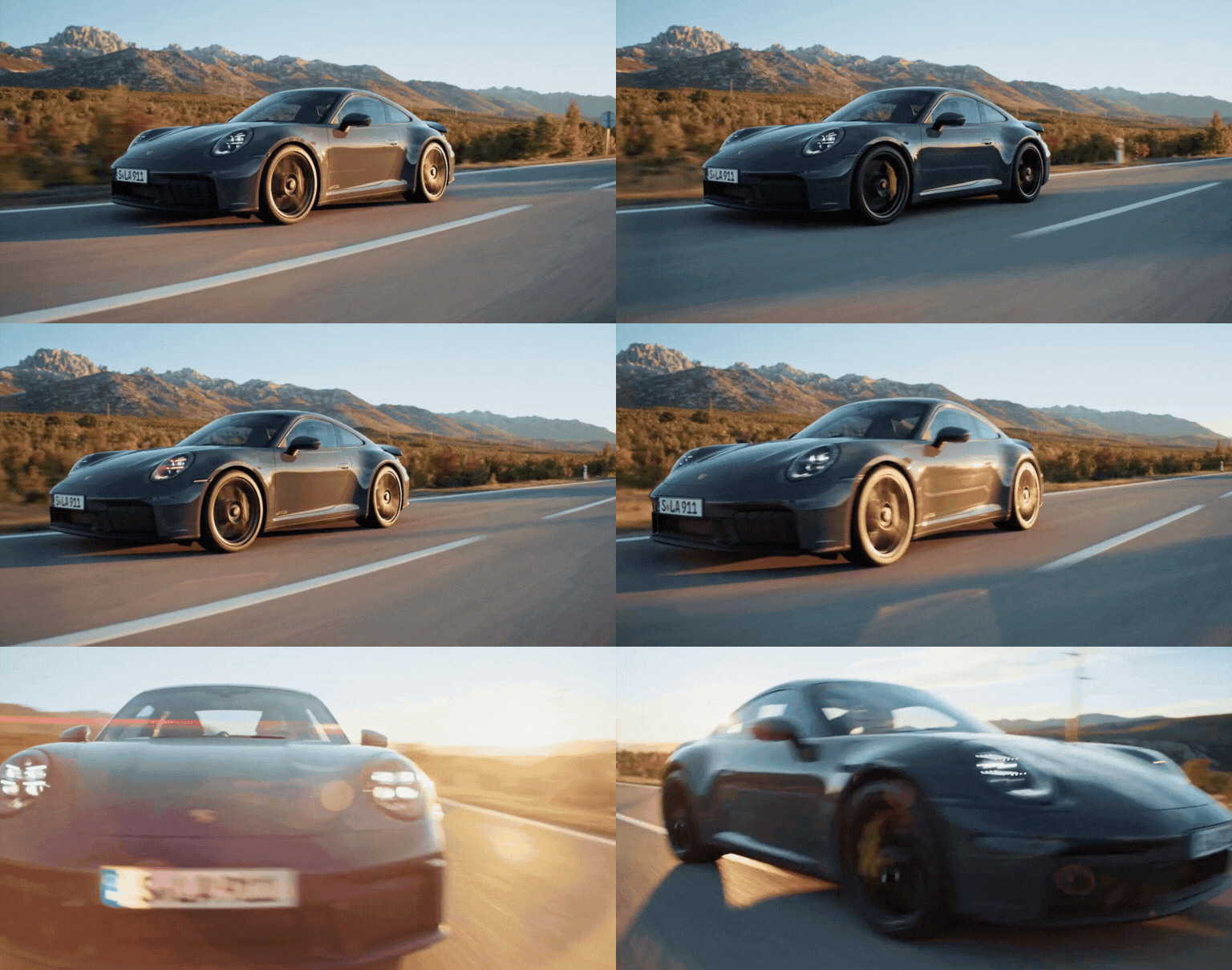
Basado en el 911 Carrera GTS Cabriolet, este ejemplar incorpora un sistema híbrido que combina eTurbo, motor eléctrico y una caja PDK especialmente ajustada.
Gracias a su motor bóxer de 3.6 litros, el Porsche 911 Spirit 70 ofrece 541 caballos de fuerza y 450 lb-pie de par.

Porsche 911 Spirit 70, exclusividad nostálgica
Este nuevo 911 Spirit 70 también marca el rumbo de la nueva estrategia de la marca alemana, que apunta a expandir las opciones de personalización, a través de su división Porsche Exclusive Manufaktur.
De acuerdo con Porsche, la demanda de personalización ha aumentado tanto que se duplicó el ingreso promedio por vehículo personalizado. Por ello, la marca planea ampliar esta capacidad.
Este ejemplar contará con un reloj exclusivo creado por Porsche Design y que incluye el patrón brillante Pasha, inspirado en el tapizado del vehículo.
Para completar la experiencia retro, Porsche Lifestyle ofrece artículos inspirados en los años 70: ropa diaria y deportiva, accesorios y réplicas de autos.

Diseño exterior: elegancia retro con un enfoque moderno
La carrocería del 911 Spirit 70 presume el tono Olive Neo, así como detalles Bronzite en el frente, la parte trasera y los rines estilo Fuchs. La capota y el marco del parabrisas en negro completan su imagen llamativa.
El capó exhibe tres franjas negras satinadas, un guiño a los adhesivos de advertencia utilizados en los 70 por los conductores de deportivos. Estas líneas continúan sobre la capota. Los vinilos laterales con el nombre Porsche y el círculo “Lollipop” completan el paquete estético.
No faltan los tradicionales escudos Porsche, Porsche Exclusive Manufaktur y Porsche Heritage, en distintos puntos del auto. Las letras doradas del logo y el nombre del modelo lucen un acabado brillante en oro galvanizado.

Interior: herencia visual y confort moderno
Dentro del vehículo destaca el motivo Pasha en tonos negros y verdes oliva. En vez del terciopelo tradicional, Porsche ha optado por materiales técnicos que mejoran el tacto, el aspecto y el confort.
Este diseño aparece en los asientos deportivos de 18 posiciones, los retrovisores, la guantera y, opcionalmente, en los respaldos y el tablero. Incluso la alfombrilla del maletero lleva este estampado.
La tapicería cuenta con cuero Club negro basalto y costuras en Olive Neo, que también forma parte del paquete estándar. El cuadro de instrumentos cuenta con una pantalla de 12.65 pulgadas con indicadores blancos, números verdes y un tacómetro digital que integra el nombre del modelo.
“I can promise you that nobody needs to worry about the word, ‘hybrid’ in a 911,” pledged Porsche’s vice president for its 911 and 718 sports car models, Frank Moser, “because our hybrid concept offers significantly enhanced performance and even more driving pleasure than the previous model.”
That’s thanks to a series of firsts for the 911. In addition to the installation of an electric motor that supplements the 911 Carrera GTS's signature flat-six boxer combustion motor with an additional 59 horsepower and 110 lb.-ft. of torque, it also receives a new BorgWarner electric turbocharger. The pushbutton start is a first for a 911, and for the first time, the 911 is an actual two-seater.
Since 1964, the 911 has carried a uselessly tiny back seat, but the GTS skips the pretense and has only a parcel shelf behind the front seats. The make-believe back seat is still available as a no-cost option.
The e-turbo not only uses its electric motor to keep the turbocharger spinning at high boost levels for lag-free throttle response from low rpm, but it turns into a generator, harvesting electric power from the fast-flowing exhaust stream at high rpm. The 11 kilowatts of power it recovers can go straight to the hybrid-electric motor, adding 15 horsepower at the car’s power peak.
This technology, which has been called MGU (Motor Generator Unit)-Heat by Formula 1, has been a key component of F1 power units during the hybrid era. Rules makers have excluded this technology as part of the cost-saving specifications for the 2026 season, which will let Porsche ad copywriters indulge in some hyperbolic claims of using “technology that is banned in Formula 1!”
Electrification would seem to add complexity to the turbocharger. In fact, having an electric motor to prevent turbo lag eliminates the need to run two smaller turbos, whose lower-mass turbines were more responsive to increases in exhaust flow than the single large turbo used now. Additionally, the sole remaining turbocharger needs no wastegate to release overpressure because boost is controlled by the unit’s motor/generator.
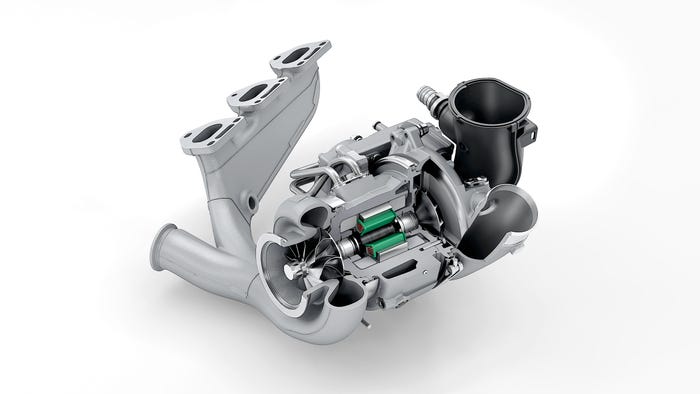
The 911 GTS's BorgWarner electric turbocharger buries its electric motor between the turbines. PORSCHE
The hybrid-electric motor is packaged between the combustion engine and the 8-speed dual-clutch transmission. It contributes 54 hp and 110 lb.-ft of torque, so the gearbox has been reinforced to withstand the additional power.
The 911 GTS stores its electric energy in a compact 400-volt, 1.9-kilowatt battery that is mounted beneath the car’s front hood, right where the regular 12-volt battery was previously. That battery used to be absorbent gas mat (AGM) technology, but has been relocated beneath the rear parcel shelf and shrunk by switching it to lithium-ion chemistry.
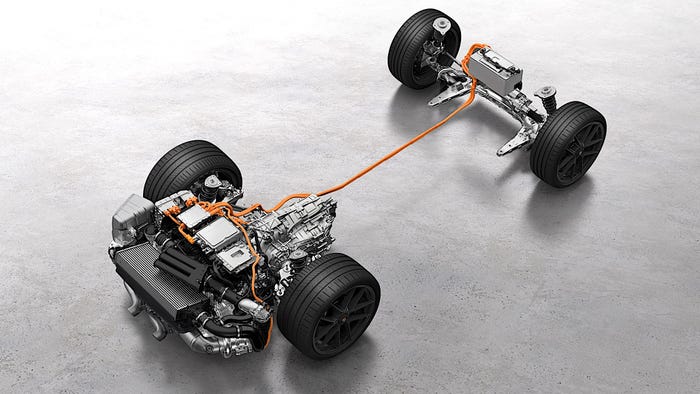
The hybrid's battery sits at the front of the car (right). PORSCHE
With 400 volts of juice coursing through the GTS’s copper veins, the car replaces the previous belt-driven air conditioning compressor with an electric-powered compressor. This shrinks the combustion engine’s package space, leaving room for the pulse inverter and DC-DC converter above the engine.
Not all of the GTS’s news is electric. The horizontally opposed boxer combustion engine gets major changes, including an increase in displacement from 3.0 liters to 3.6 liters as a result of an increase in cylinder bore to 97 mm and a stroke that is lengthened to 81 mm. The combustion engine produces 478 hp and 420 lb.-ft. by itself, and the combined power unit produces a total of 532 hp and 449 lb.-ft. That marks a 59-hp advantage over the outgoing 911 GTS versus a weight penalty of 103 lbs.
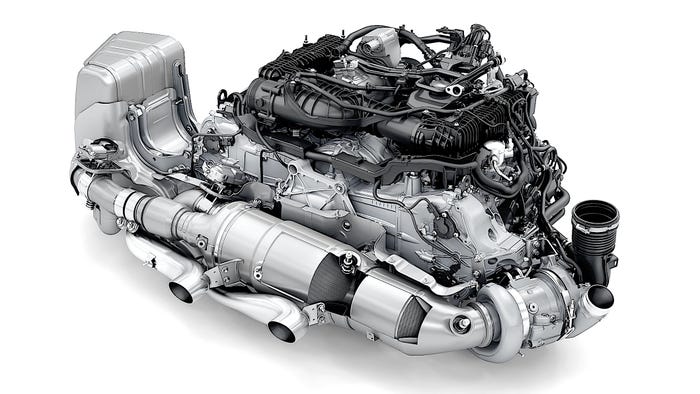
The 911 GTS's 6-cylinder engine is 0.6 liters bigger on the inside, but is smaller on the outside thanks to the elimination of the belt drive system for the air conditioning compressor. PORSCHE
It is worth remembering that the 2024 911 GTS provided plenty of performance, so there is no low-hanging fruit waiting to be gathered by this 2025 model. So all of these improvements yield the modest benefit of improving 0-60 mph acceleration by a single tenth of a second, to 3.9 seconds, and increasing top speed by a single mile per hour, to 183 mph. All of the improvements combine to shave 8.7 seconds off the car’s Nurburgring Nordschleife lap time.
The starting price for the 2025 911 Carrera GTS is $180,195.
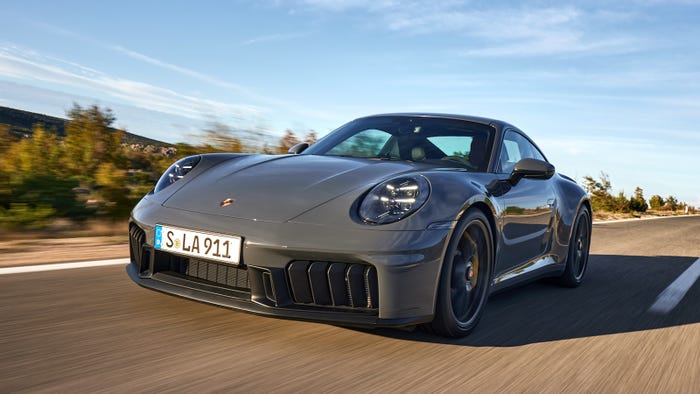
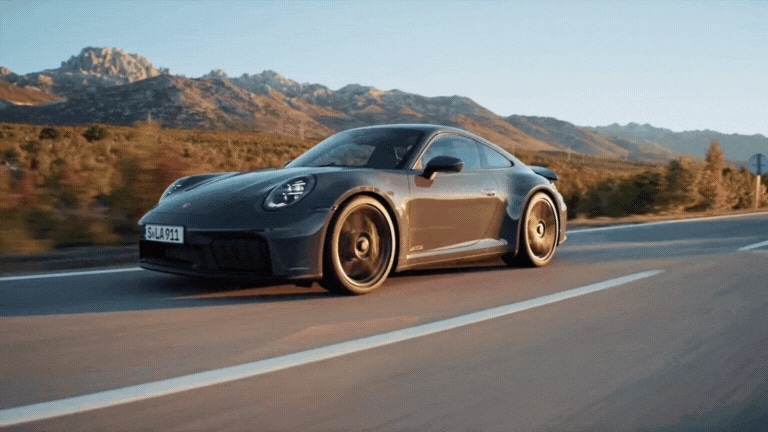
2025 Porsche 911 Carrera GTS. PORSCHE


0 Comentarios